
Cherokee County Release Records
A person is released from Cherokee County Detention Center, or CCDC, when that particular booking ends. The reason may be bond, recognizance, dismissal, time served, completion of a county sentence, a court order, or transfer. Only some of those events return the person to the community. A transfer to the Oklahoma Department of Corrections, another county, the U.S. Marshals Service, or immigration custody ends CCDC custody while another form of confinement continues.
Cherokee County released inmates usually disappear from a live custody list because the roster serves a current-custody task. That disappearance is not proof of freedom. CCDC records the physical jail exit. The Cherokee County Court Clerk preserves the orders and case events behind many exits. ODOC records a later state commitment or state supervision. VINELink relays status from a participating source, while federal systems have separate limits. The best answer joins the identity, booking episode, discharge method, and next custodian.
Cherokee County Release Types
Release language can sound final when it is not. A bond release ends the booking but leaves the case pending. Time served means the court credited or completed a custodial part of a sentence, not that all fines or supervision ended. A transfer is an exit from one agency, not a return home. Read the jail code with the court order and receiving record before drawing a conclusion.
| Recorded outcome | What it means | Next record to check |
|---|---|---|
| Bond or recognizance | The person leaves that booking under court-set terms. | Court docket, bond order, and CCDC discharge entry |
| Dismissal or court order | The named case may no longer support detention, though another hold may. | Filed court order and all active cases |
| Time served or sentence complete | The ordered local jail term was credited or completed. | Judgment, sentence, and jail register |
| Probation or parole | Community supervision may follow custody. | ODOC status and the controlling judgment |
| Agency transfer | CCDC custody ended but custody may continue elsewhere. | Receiving agency, ODOC, BOP, ICE, or USMS channel |
- Discharge
- The end of a stated custody or supervision status.
- Time served
- Credit or completion for the custodial part ordered by a court.
- Detainer
- A request or notice tied to another agency’s possible custody interest.
- Expungement
- A court process that may seal qualifying Oklahoma arrest and case records.
Cherokee County Discharge Fields
Oklahoma law gives the local release inquiry a precise starting point. Under 51 O.S. § 24A.8, specified jail-register information, if kept, includes a prisoner’s name, date and cause of commitment, committing authority, description, and the date or manner of discharge or escape. The statute does not promise that every internal note, image, video, or custom database export is public. Ask for existing fields for one identified booking.
| Identity | Full name plus birth date, booking number, description, or another identifier that separates same-name people. |
|---|---|
| Custody episode | Booking date and time, arresting or committing authority, cause or charge, and court or case tie. |
| Exit | Date and time of discharge, when kept, plus the recorded release code or manner. |
| Authority | Bond, recognizance, court order, sentence completion, or other releasing authority as recorded. |
| Destination | Community release or the receiving agency when the event was a transfer. |
| Related item | Booking photograph, if kept and disclosable, and a legend for any unclear local code. |
A repeat booking can produce several correct release dates. Always identify the episode. If two records conflict, compare their update times and roles. CCDC is the source for its physical exit, the court is the source for its order, and a receiving agency is the source for later custody.
Request Cherokee County Release Records
CCDC is a trust under a County Jail Board. It is not a sheriff-operated jail. Direct an operational jail-register or discharge request to CCDC or the trust’s records custodian. The Cherokee County open-records form can organize a written request, but using that form does not make the County Clerk the custodian of every jail record. Ask the recipient to identify or forward the request to the correct custodian if needed.
- Give the full name and a birth date, booking number, or approximate booking date. Keep the request tied to one episode or a precise date range.
- Ask for inspection or an electronic copy of the existing jail-register and booking/discharge fields. Name the discharge date, manner, authority, and transfer destination.
- Request the booking photograph only if kept and subject to disclosure. Exclude medical, juvenile, sealed, and security-sensitive material.
- Ask for a fee estimate before costs arise. No verified CCDC release-record fee schedule or universal response time was published in the research.
- Save the submission, tracking information, response, and any explanation of a denial or redaction.
The underlying register may remain available even when a public roster no longer shows the name. Oklahoma’s Open Records Act generally applies to existing records and does not require staff to make a custom release list or answer an open-ended investigation. A narrow request is easier to route and less likely to seek exempt material.
Sealing is separate from release. Sections 22 O.S. § 18 and 22 O.S. § 19 govern eligibility and procedure for Oklahoma expungement. It is not automatic when custody ends. A sealing order can alter what a public case or booking search returns, and no one should try to defeat that restriction.
Note: Ask for a field legend when a discharge code is unclear; do not turn an abbreviation into a legal conclusion.
CCDC Trust Release Custody
The strongest Cherokee County distinction is governance. The official detention-center page calls CCDC a trust under a County Jail Board. The official sheriff page says the sheriff does not operate the jail and lacks day-to-day supervisory responsibility. The sheriff remains a law-enforcement and transport agency and may hold records it created. It should not receive every jail-release request by habit.
The official CCDC page captured during the source review shows the trust relationship but no verified recent-release feed.
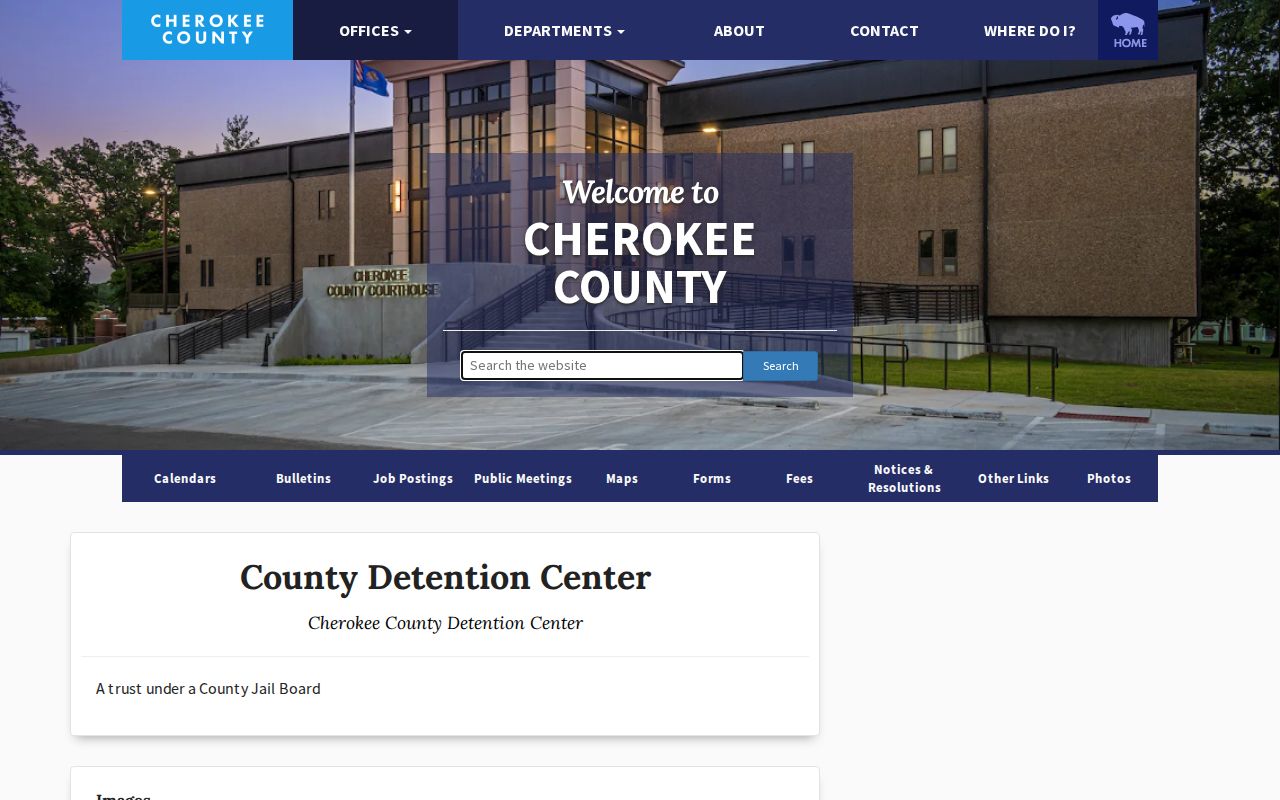
That sparse official page makes the written jail-register route central. The sheriff page remains useful for arrest, transport, service, and other records that the sheriff actually created.
Cherokee County Release Court Records
CCDC and the court do not share one complete release database. CCDC records physical custody. The Cherokee County Court Clerk holds filed state-court orders. OSCN and ODCR are search interfaces that can locate a case after a jail roster changes, but a docket summary is not the same as a certified judgment or discharge record.
Look for bond settings, release orders, dismissals, pleas, deferred or suspended sentences, commitments, revocations, warrant recalls, and completion entries. Then reconcile the court event with the jail’s actual exit. A bond receipt can precede discharge. A dismissal in one case does not cancel a hold in another.
Cherokee County Sovereign Release Records
Tahlequah’s place within the Cherokee Nation’s governmental center adds another layer. Municipal, tribal, state, and federal actors may each create a different record. In an Indian-country matter, identify the arresting sovereign, filing court, accepting facility, and receiving agency. The Cherokee Nation Marshal Service form found in the research is restricted to Nation or law-enforcement use and is not a general public Oklahoma records form.
A CCDC discharge cannot decide which sovereign has the case. It records the local physical exit. Pair it with the correct tribal, state, municipal, or federal court record and any receiving-custodian entry. This Cherokee County release path prevents a state database from being used as if it contained all Cherokee Nation or federal records.
Find Cherokee County Released Inmates
Start with identity and the last known custodian. Write down the exact name, birth date or age, booking date, arresting agency, and any booking, case, ODOC, or federal number. Then follow the custody path. Running every name through every database can join unrelated people and can still miss the correct record.
- Check the official CCDC page for its current links, then ask CCDC for the named booking’s date and manner of discharge. Ask whether the result was community release or transfer.
- Search the state court case in OSCN and ODCR. Obtain the filed order or certified record from the Cherokee County Court Clerk when exact terms matter.
- If the judgment committed the person to ODOC, use the state offender lookup. Match the county, case, sentence rows, status, and facility or supervision entry.
- Use Oklahoma VINE for a specific participating custody record and alerts. Confirm the source agency and update time rather than treating a missing result as release.
- Use BOP, ICE, or the federal case and USMS channel only when federal or immigration custody is plausible.
- If no public view settles the question, send a narrow records request to the actual custodian.
The Cherokee County 24-hour release page explains the dated absence of a verified same-day feed and the correct fallback. For one known person, the sequence above remains the fuller route.
ODOC Cherokee County Release Search
The ODOC Offender Lookup is the central state-sentence route. Search by ODOC number when known. Otherwise begin with exact surname and given name, loosen one field at a time, and compare descriptors. Open the detail, then match the Cherokee County case and offense before attributing the record.
| Field or record area | How to use it |
|---|---|
| ODOC number | The safest public search key when available. |
| Name and descriptors | Separate aliases and same-name results; confirm identity with the court record. |
| Status and location | Show state institution, supervision, or other ODOC context, not the CCDC booking itself. |
| County, case, and offense | Tie a sentence row to the known judgment. County in a row is not current physical location. |
| Sentence entries | Read all active and inactive terms, including concurrent, consecutive, probation, parole, or revocation context. |
ODOC does not cover each person who left CCDC. A person who bonded out, completed only a local misdemeanor sentence, was acquitted, or never entered ODOC may have no state corrections record. Conversely, an ODOC institution entry can show that the CCDC disappearance was a transfer, not release to the community.
The image from the official ODOC offender search shows the state lookup starting point used for Cherokee County state-sentence records.
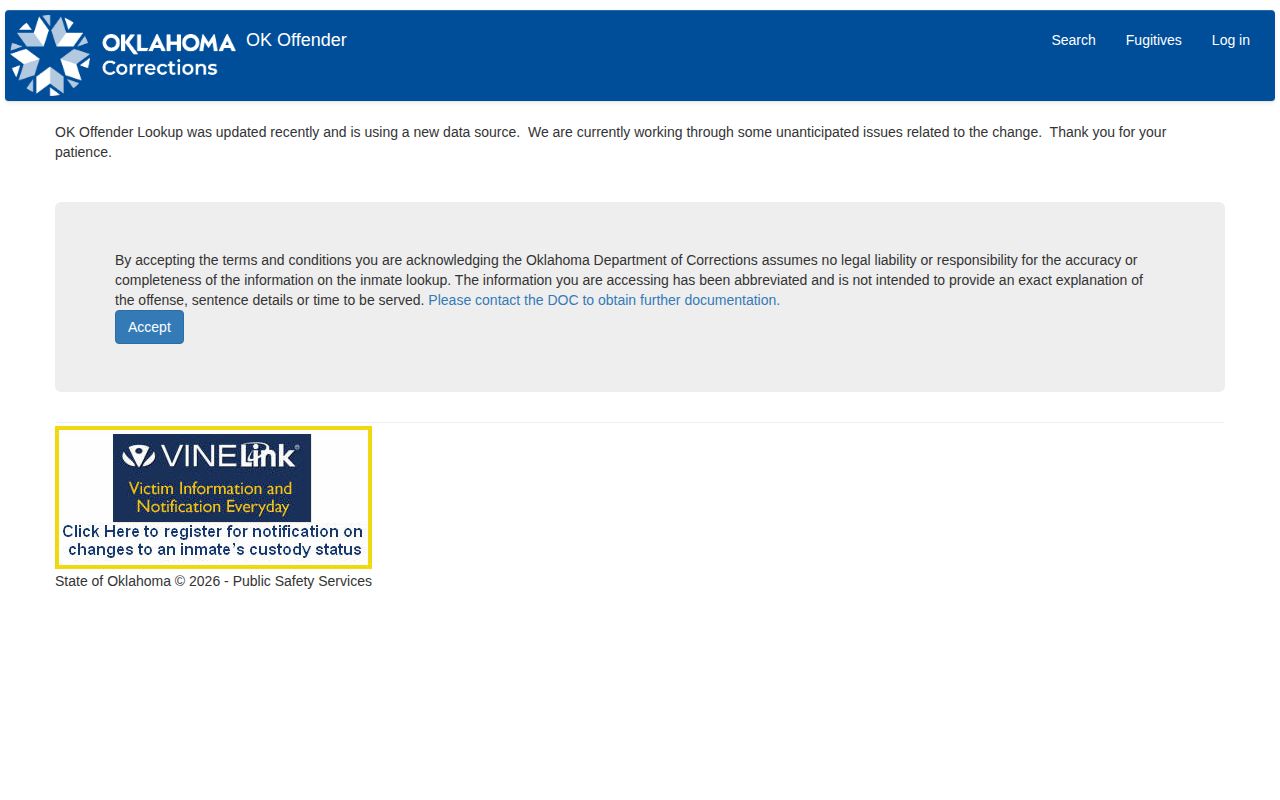
Read the resulting sentence record as a whole. ODOC says a particular inmate’s actual release date is confidential without a legitimate need and describes calculations as tentative, so no public field should be promised for every record.
Cherokee County Release Source Check
Each system answers a different question. Choose the source that owns the event, then confirm the later status when a transfer or supervision term appears.
| Source | Best use | What it cannot prove alone |
|---|---|---|
| CCDC jail register | Date and manner the local booking ended | That no other agency took custody |
| Court record | Order, disposition, judgment, and pending case events | The exact physical exit time |
| ODOC record | State sentence, institution, parole, probation, or discharge context | Every county-only booking |
| VINELink | Specific-person status and offered alerts from a participating source | The full legal discharge record or all custodians |
| BOP locator | Federal prison custody and historical federal release result | End of supervision or other sovereign custody |
| ICE locator | Current and some recent immigration custody records | Every recent transfer or the original county release reason |
Cherokee County Release Supervision
Parole and probation are not synonyms. Parole follows a custodial term under the applicable state process. Probation can arise from a court judgment without a prison release. ODOC administers community supervision, while the Oklahoma Pardon and Parole Board handles parole consideration and publishes dockets and results. A favorable board action is not a jail-door timestamp.
Search the ODOC record by number, review all sentence rows, and use the official supervision office route. The local ODOC Tahlequah office serves Cherokee County within a multicounty area, but its existence does not prove that any named person reports there. Discharge from incarceration can occur before discharge from all supervision.
Cherokee County Release Reentry Help
Cherokee Nation’s Coming Home Reentry and Justice Involved Programs is a specific Tahlequah resource for eligible Cherokee citizens. The official program describes case-by-case aid with identification, counseling, health navigation, clothing, hygiene needs, and driver-license reinstatement. Proof of release or justice involvement is required.
This program is not a custody locator and does not confirm a CCDC discharge. Its release-paperwork requirement is one practical reason to retain the jail, court, or ODOC document that states the person’s actual status. Contact the program through its official Cherokee Nation page for current eligibility and service details.
Oklahoma ID After Release
Identification can affect the first days after an ODOC release. ODOC pre-release policy says a person going to an Oklahoma address will normally have an Oklahoma identification card at release when documentation, eligibility, and timing conditions are met. Required groundwork includes identity documents and an Oklahoma release address. The policy also lists exclusions, including an active detainer and other categories, so possession of an ID must never be promised.
The released person can compare the papers received at discharge with Service Oklahoma’s current state ID requirements. County-only CCDC releases do not automatically follow the same ODOC pre-release process. In that setting, the jail’s property receipt, court papers, and personal documents are separate items.
Cherokee County ICE Transfers
An immigration detainer can make “released” misleading. ICE describes a detainer as a request for notice before release and for up to an added period of custody so the Department of Homeland Security can assume custody. If a CCDC register says “released to ICE,” the accurate conclusion is that county custody ended by transfer, subject to confirmation from ICE. It is not proof of return to the community.
The research did not establish that CCDC has a current ICE contract or that any named person has such a hold. Use this path only when a booking entry, court record, attorney, or other reliable source makes it plausible. The ICE detainee locator can lag and omits some categories. A negative result should lead to the relevant official contact route, not a guess.
Cherokee County Federal Release Records
VINELink can provide Oklahoma custody notifications when the correct participating source supplies the record. Select Oklahoma, match one person and agency, and read the status phrase and last update literally. A notice is a prompt to verify, not the jail’s legal discharge record. It also does not replace the separate parole-notice route described by the Oklahoma Pardon and Parole Board.
For a federal prison sentence, the BOP Inmate Locator may preserve a historical “Released” result with a date. That is a BOP event. It does not prove that federal supervision or another agency’s custody ended. Federal pretrial prisoners often fall under USMS custody, which lacks a broad locator like BOP, so the federal case, counsel, and prisoner-operations channel matter.
The image from the official BOP Inmate Locator shows the search path for a Cherokee County person in the federal prison system.
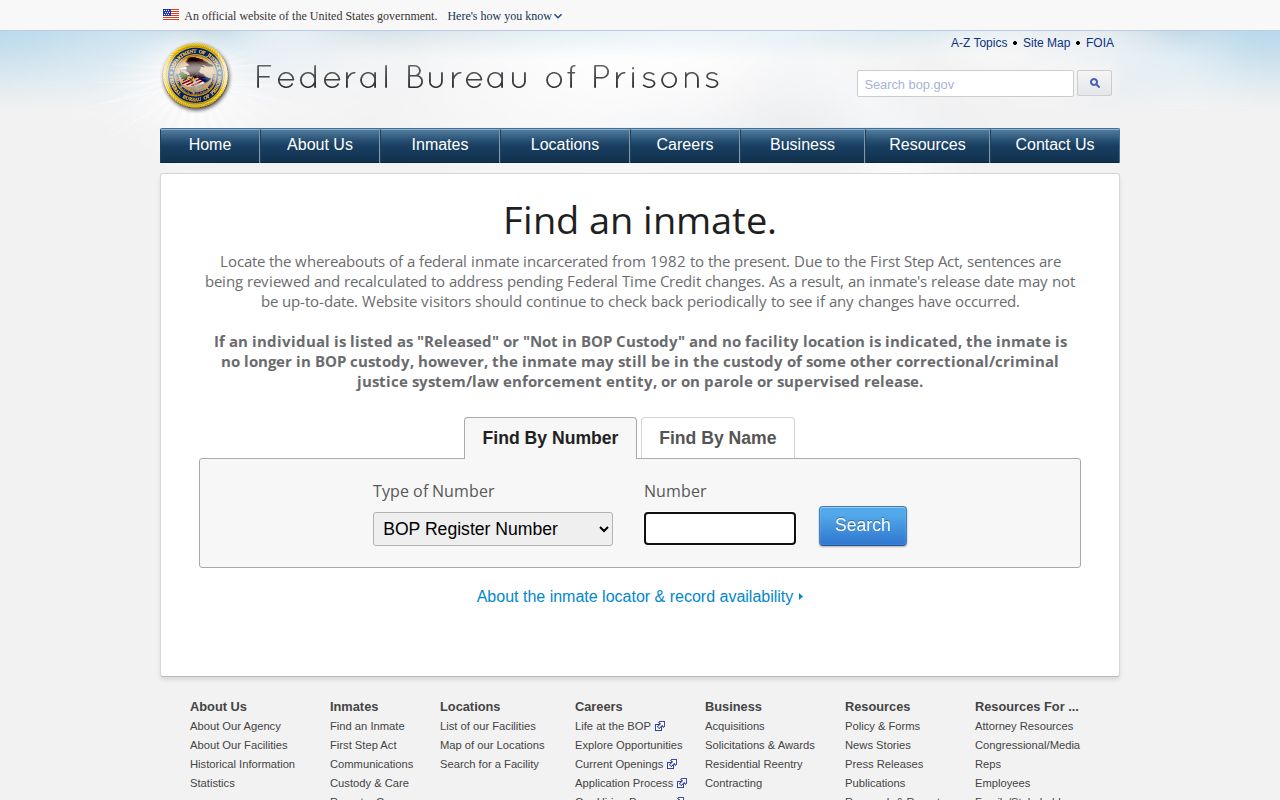
A federal result should be kept separate from CCDC, ODOC, tribal, and immigration records. Similar names across systems do not establish identity.
Cherokee County Release Facilities
The Facility Map includes physical custodians and systems that can explain where a person went. Some entries are not buildings in Cherokee County. They are included because their records can become the next step after a local exit.
- Cherokee County Detention Center is the trust-operated local jail and the main source for its booking and discharge record.
- Cherokee County Sheriff’s Office holds the arrest, transport, or process records it created but does not operate CCDC.
- Tahlequah Police Department may document a municipal arrest, citation release, or transport to CCDC.
- Cherokee Nation Marshal Service is a tribal agency whose records follow Cherokee Nation law and agency rules.
- ODOC covers state commitments and state probation or parole supervision.
- BOP, ICE, and USMS each cover a different federal custody setting and must not be merged.
Verified as of July 31, 2026: no official CCDC 24-hour or 72-hour release feed was found. Dynamic pages and agency contacts should be checked again when a request is made.