
Verified as of August 1, 2026. Supervision records and office assignments can change. Recheck the linked agency source before relying on a status.
Cherokee County Parole and Probation
Oklahoma assigns different roles to the court, the Oklahoma Pardon and Parole Board, and the Oklahoma Department of Corrections. Probation usually comes from a court judgment and may begin without a prison release. Parole follows a term of imprisonment and allows the person to serve part of the sentence under set rules in the community. ODOC administers both probation and parole supervision. The Board considers parole matters, but it is not the local reporting office and does not calculate the final custody exit.
A suspended sentence adds another source of confusion. It is a sentence the court holds back in whole or part while the person follows court and supervision terms. A split sentence can combine time in custody with a suspended part. That is why the Cherokee County court case, ODOC offender record, and release record should be read together. Leaving the Cherokee County Detention Center may end one booking while state supervision, another sentence, or a hold remains active.
| Feature | Parole | Probation |
|---|---|---|
| How it starts | After incarceration and lawful parole action | Through a court sentence or suspended term |
| Main decision source | PPB docket and results, subject to the process that applies | Cherokee County judgment and sentence |
| Supervising agency | ODOC Probation and Parole Services | ODOC Probation and Parole Services when assigned |
| Proof it ended | ODOC discharge record or certificate | Court and ODOC discharge records as applicable |
- Parole
- Supervised release after part of a prison sentence.
- Probation
- Community supervision imposed by a court, sometimes without prison.
- Discharge
- The formal end of custody or supervision, depending on the named record.
- Absconder
- A person reported as having left supervision without authorization.
Verify Cherokee County Post-Release Supervision
Start with the ODOC Offender Lookup. An ODOC number is the strongest search key because similar names and aliases can produce the wrong match. If only a name is known, compare the date of birth, basic descriptors, county, court case, and offense. Read all sentence rows. An inactive older term can appear beside an active term, and one case may end while another continues.
- Search the exact name or ODOC number. Open only a record whose identifiers and Cherokee County case match.
- Read the current status and any facility or supervision information. Do not treat one closed sentence row as the status of the whole record.
- Check the Cherokee County judgment in the court docket when the record refers to probation, a suspended term, revocation, or more than one sentence.
- For parole history, search the correct month in the PPB docket and results. A docket entry is an agenda, while the result records board action.
- Contact the listed ODOC office only for a fact it can lawfully confirm. An office address alone does not prove that a named person reports there.
The full Cherokee County custody and release-record path is on the released inmates search page. It helps distinguish a CCDC booking exit from a later ODOC release. A person who posted bond, completed a county misdemeanor, or had a case dismissed may never enter the ODOC system.
The live ODOC lookup currently warns that a recent data-source update has caused unanticipated issues. Treat a missing or odd result as a prompt to recheck identifiers and contact ODOC, not as proof that supervision ended.
The official ODOC Probation and Parole Services page shows the agency’s current office list.
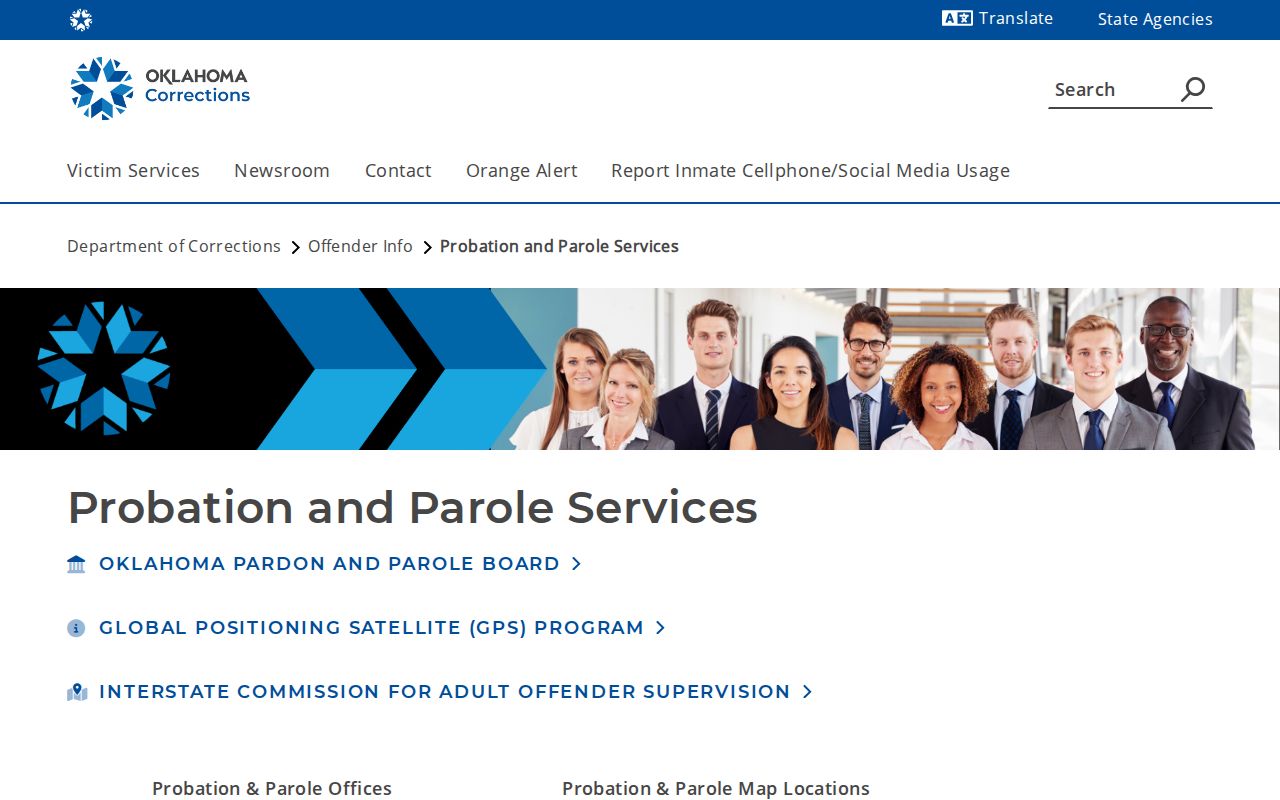
The listing ties Cherokee County to the Tahlequah office, but the matched offender record remains the starting point for a person-specific check.
Read Cherokee County Parole Results
The PPB Dockets & Results page organizes parole material by meeting month. Search by name and ODOC number, then open both the docket and the results for the relevant month. The docket says that a matter was set for consideration. It does not prove release. Results may use terms such as recommended, granted, denied, passed, continued, stricken, no action, or reconsideration. Preserve the exact term because each describes a different procedural event.
A favorable result also is not the physical release record. More legal or administrative steps may remain. Another sentence, a detainer, or update timing can keep a person in custody after a favorable board action. Confirm the Board outcome with the ODOC status and discharge record. The court judgment supplies the sentence, while the CCDC jail register covers only the separate local booking episode.
The official source below displays the current monthly structure and result links.
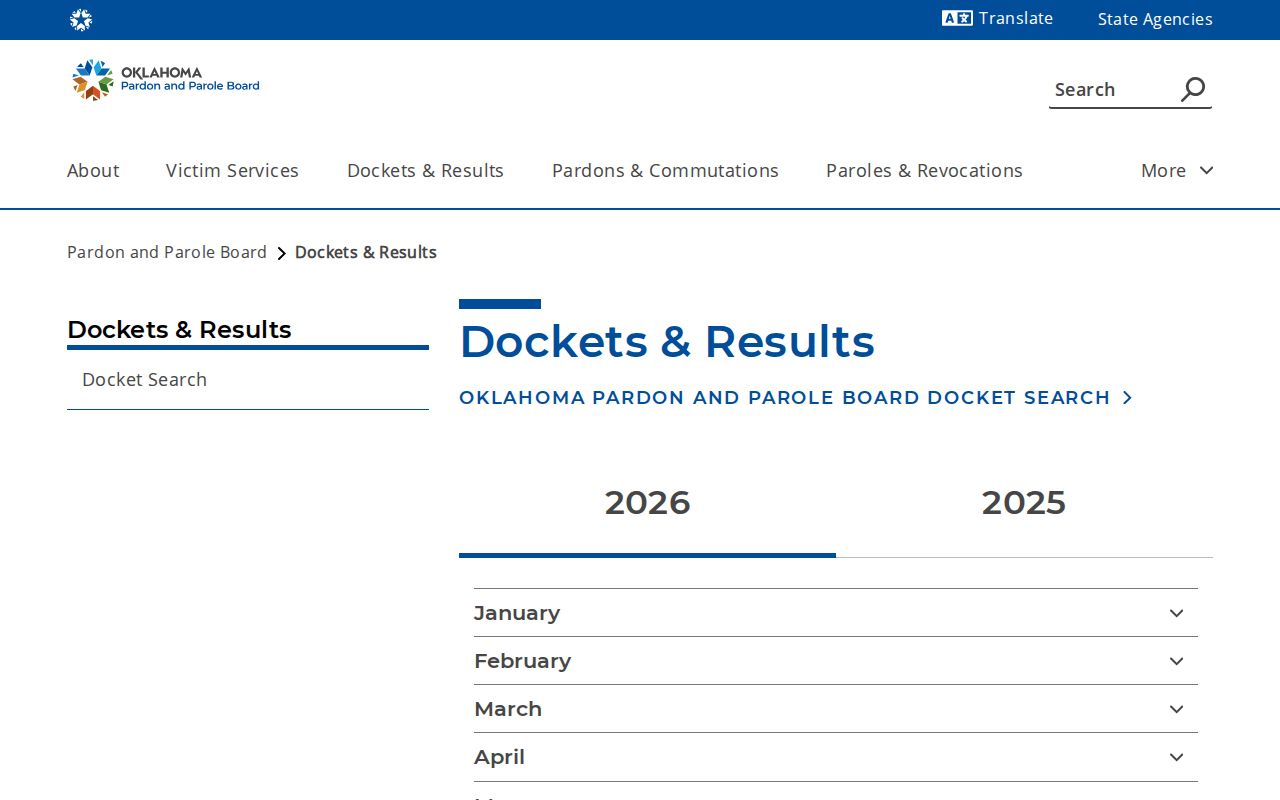
Meeting dates can change, so use the current PPB notice instead of assuming a fixed day each month.
Note: A parole hearing date is not a projected release date, a discharge date, or the end of Cherokee County supervision.
Cherokee County Supervision Office
ODOC publishes a local route for Cherokee County supervision questions. Its current office page assigns Adair and Cherokee counties to the Tahlequah Probation and Parole office. This is a direct place to ask how an official ODOC record should be read or where a person’s assigned office is, subject to disclosure limits. It is not a public roster of everyone supervised in Cherokee County.
ODOC Tahlequah Probation and Parole311 South Muskogee Avenue
Tahlequah, OK 74464
918-456-9921
Before calling, have the exact name and ODOC number ready. Ask a narrow question about the published record or office assignment. Do not infer a reporting address from residence, an old case, or a CCDC release. ODOC’s live record and internal assignment control.
Cherokee County Supervision Violations
Supervision conditions are the rules attached to parole or probation. Their exact terms come from the parole certificate, court order, and ODOC instructions. A reported violation can lead to review, a warrant, arrest, or revocation proceedings, but it does not by itself show that supervision has ended. Revocation means that a court or authorized body has withdrawn all or part of the community placement after the required process.
An absconder or warrant flag is also not a release record. It may show that the person is wanted for leaving supervision or failing to comply. Use an official ODOC or law-enforcement source and contact the supervising office. Do not approach a person shown as wanted. For custody changes, OK VINE may offer an alert when the relevant agency participates, but the PPB VINE notice states that VINE does not provide parole notification. Eligible victims seeking parole notice must register separately with PPB Victim Services.
When a violation leads to a new Cherokee County booking, keep the supervision issue separate from the jail episode. CCDC records commitment and discharge for that booking. ODOC records the supervision status, and the court or Board record shows the action within its authority. A release from CCDC after the violation arrest does not erase the pending supervision matter. Match dates and case numbers before treating any status as final.
Cherokee County Supervision Discharge
Release from incarceration and discharge from supervision are separate events. A person can leave prison on parole, leave CCDC with a probation term, or complete a custodial part while a suspended sentence remains. The end of supervision should be confirmed through an ODOC discharge document, a court order, or another record that expressly identifies the term that ended.
Dates must stay linked to their source. A parole-eligibility date means the case may be considered. A PPB meeting date marks board review. A projected release date is an ODOC estimate. A custody discharge records the actual exit from that custodian. A supervision discharge ends the named community term. When records conflict, compare the case number, sentence row, and status date rather than choosing the newest screen without context.
Ask for the record by its proper name. A request for “release proof” may return the wrong event, while a request for the ODOC supervision discharge or the CCDC jail-register discharge points to a defined record. If more than one sentence is shown, identify the sentence and county case that the request concerns.
Cherokee County Release Reentry Support
Cherokee Nation operates the Coming Home Reentry & Justice Involved Programs in Tahlequah for eligible Cherokee citizens who are justice-involved or released. Support is assessed case by case. The official program describes help with identification, counseling, health and behavioral-health navigation, clothing, hygiene, driver-license reinstatement, and other practical needs. Proof of justice involvement or release paperwork is required.
Coming Home Reentry & Justice Involved Programs17675 South Muskogee Avenue
Tahlequah, OK
918-453-5555
career-services-dept@cherokee.org
This program is a reentry resource, not an ODOC supervision office. Participation does not confirm parole, probation, or discharge status. Keep release paperwork and the ODOC number available because they can help show eligibility and connect records from different agencies.
Cherokee County Release Identification
ODOC pre-release policy addresses identification for people returning to an Oklahoma address. Attachment F to the pre-release policy says an Oklahoma identification card will normally be available when documentation, eligibility, release-address, and timing conditions are met. It refers to items such as a certified birth certificate and Social Security documentation. Active detainers and other listed exclusions can prevent the process.
No one should promise that an ID will be in hand at release. The person can compare the discharge packet with Service Oklahoma identification requirements and ask the case manager about missing documents before release. An ID helps with daily reentry tasks, but it does not prove supervision status. ODOC and court records still control that question.
Note: Keep the discharge paper, supervision instructions, and identification documents together because each serves a different role after a Cherokee County release.