
Cherokee County 72-Hour Release Source
A rolling three-day page would normally gather discharge events into one time window. Cherokee County’s official sites do not provide such a verified page. The Cherokee County Detention Center page identifies CCDC as a trust under a County Jail Board but displays no 72-hour control, release archive, update schedule, field inventory, or retention rule. The absence finding was verified in the project research on July 31, 2026. It should remain dated because online tools can change.
This is not a sheriff-jail feed gap that can be solved by guessing another sheriff URL. The county sheriff page says the sheriff does not operate CCDC and has no day-to-day supervisory duty over it. The sheriff may hold arrest, transport, or process records that office created. CCDC or the trust custodian holds the operational booking and discharge side. A request for a three-day list of existing entries must start with the actual custodian.
The successful source capture from the official detention-center page documents the public interface reviewed for this release window.
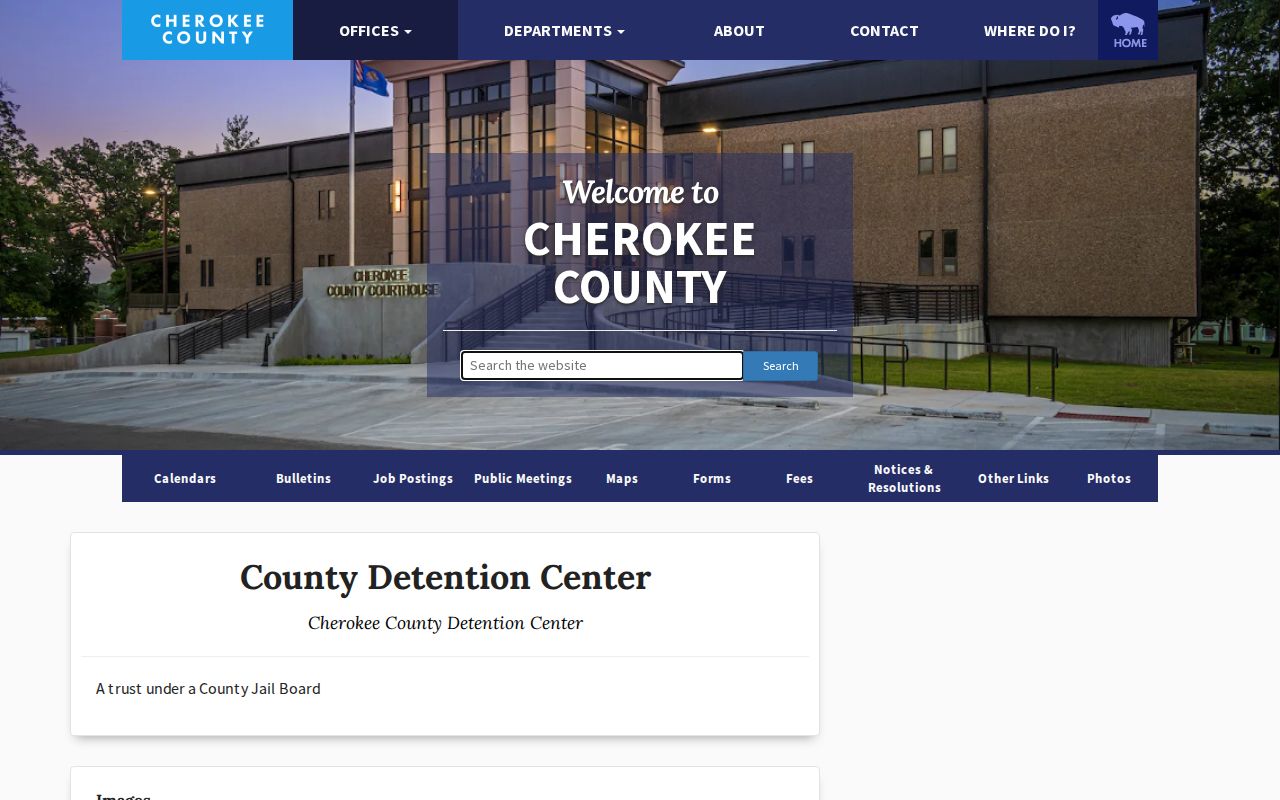
The page confirms trust governance, while its sparse content offers no public three-day release report to read or filter.
Check Cherokee County 72-Hour Releases
A three-day request should define the time span. State the beginning and ending date, use local dates, and ask for existing jail-register discharge entries within that interval. The agency need not create a new report merely because a requester uses the words “72-hour list.” If its database can export an existing set, the custodian can decide how the Open Records Act applies. If not, ask for the records in the form in which they are kept.
- Confirm that the source is CCDC in Tahlequah, Cherokee County, Oklahoma.
- Set an exact three-day beginning and ending date instead of saying “recent.”
- Ask CCDC or the trust custodian for existing jail-register entries whose discharge falls within that range.
- Request discharge date and manner plus the receiving agency when an entry reflects transfer.
- Match a person by full name and another identifier, then compare the court case or later custodian.
When the concern is one known person rather than the whole date range, use the full Cherokee County released-inmate lookup. A booking number, birth date, known arrest date, or case number can keep repeat bookings and same-name people apart. Collect only what is needed to identify the episode. Broad personal data does not improve a focused release-record request.
Note: Keep the submission date and requested interval so the scope remains clear if the custodian asks for a narrower search.
Cherokee County 72-Hour Release Fields
No public Cherokee County three-day screen has verified columns. The table below therefore describes the existing CCDC fields worth requesting, not claims about an online feed. Oklahoma’s jail-register provision requires inspection and copying of listed data if kept. It expressly includes the date or manner of discharge or escape. The law does not require CCDC to create a special 72-hour table, calculate an answer, or disclose exempt material.
| Field | Use within the three-day review |
|---|---|
| Name and booking number | Links the release event to the right person and custody episode. |
| Booking or commitment date | Separates older custody from the discharge event inside the selected range. |
| Committing authority | Identifies the agency or court connected to the entry. |
| Discharge date and time | Places the end of CCDC custody within the requested interval. |
| Manner of discharge | Distinguishes bond, order, time served, transfer, or another recorded code. |
| Destination or receiving agency | Shows whether the event led to the community or another custodian. |
Local software may abbreviate a release code. Ask for a legend or plain explanation from the custodian instead of translating it yourself. One row marked “transfer” may mean continued state, tribal, federal, immigration, or other county custody. A bond release does not dismiss the case. A discharge date also does not prove that probation, parole, fines, or a separate hold ended.
Cherokee County Weekend Release Review
The practical value of a 72-hour scope is continuity. A person checking after a weekend or office closure can define one interval instead of trying to reconstruct three separate same-day screens. Cherokee County has not published a CCDC weekend-release schedule, holiday rule, or special processing cadence, so none should be assumed. The range helps gather events; it does not establish when staff processed each public-facing update.
Compare the jail’s discharge transaction with the court record. OSCN and ODCR can serve as finding aids for a bond order, dismissal, plea, sentence, warrant event, or other docket entry. The Cherokee County Court Clerk is the source for filed district-court records when precision matters. A court order can explain why CCDC was authorized to release someone, but its filed date may not equal the later time when the physical exit was completed.
Holidays can also affect when a records office responds, but no local response guarantee was verified. The county open-records form states that copying charges may apply without setting a flat CCDC fee or turnaround. Ask for an electronic copy, a fee estimate, and redirection if the recipient is not custodian.
Note: A three-day window organizes the request; it does not create a public report or promise that every source updates at once.
Validate Cherokee County 72-Hour Results
Jurisdiction checking is a required part of this local search. Results for Cherokee County in Alabama, Georgia, Kansas, South Carolina, and Texas may show polished jail lists that do not concern Oklahoma. A broad query can also surface the historic Cherokee National Prison in Tahlequah, which is now a museum. Neither source answers who left the modern trust-operated CCDC during the requested three days.
Validate four points before saving a result: Oklahoma as the state, Tahlequah as the local seat, an official county or agency domain, and CCDC as a trust under the County Jail Board. The official sheriff page adds a useful cross-check because it says the sheriff does not run the jail. If a site calls its data an Oklahoma CCDC release feed but describes routine sheriff operation, request its source and update time before relying on it.
This treatment differs from the same-day page by focusing on range integrity. Confirm which dates and time zone a source uses, whether the start and end are inclusive, and whether each row represents discharge rather than booking, transfer intake, or current custody. Cherokee County publishes none of those feed rules, so a third party’s interface cannot be attributed to CCDC without official endorsement.
Cherokee County Release Fallback Chain
Use a written request first when the goal is a complete three-day set. A focused request can seek “inspection or an electronic copy of existing jail-register entries with a date of discharge from the stated start date through the stated end date, including the name, discharge date, manner of discharge, and receiving agency if recorded.” Add that no custom narrative is requested. If the system does not hold an existing list, ask how the underlying entries may be inspected.
For each name, use the court and custodian chain. A state judgment can lead to ODOC rather than freedom, so check the ODOC Offender Lookup and match county, case, sentence, status, and facility or supervision details. A CCDC-only bond or local sentence may leave no ODOC record. VINELink can relay a participating agency’s status and notifications for one person, but it is not a retrospective countywide list and should be reconciled with the jail record.
Federal and immigration systems require their own scope. BOP covers federal prison sentences and can retain historical released results. USMS often controls federal pretrial transport without a general public inmate locator. ICE’s locator is relevant only when an immigration transfer is plausible. If CCDC records discharge to one of these agencies, report the event as a transfer from county custody until the next custodian confirms otherwise.
Cherokee County Release Status Compared
A wider list can contain several kinds of departure. Read the discharge field next to the receiving authority and court case. The same word “release” may refer only to the end of CCDC control, while another agency immediately assumes custody. The source that controls each fact is different.
| Observed event | Best confirmation | What it does not prove |
|---|---|---|
| Community discharge from CCDC | CCDC jail register plus the court order or case entry | That the criminal case or all supervision ended |
| Transfer to ODOC | CCDC destination and ODOC status/location | Release from incarceration |
| Transfer on another hold | CCDC destination and receiving jail or agency | Return to the community |
| No current CCDC listing | Discharge record and current custodian check | Any particular release date or outcome |
Use the Cherokee County 24-hour release process when the question is limited to today. Keep the three-day method for date-range review. Neither route should reuse a live detainee record as proof of release. The underlying discharge entry remains the key source after the person drops from a current roster.
Cherokee County Three-Day Record Integrity
Save each record with its source and “as of” time. Name spellings, birth dates, charge text, release codes, and destinations may later be corrected. If two systems disagree, compare their update times and authority. CCDC controls its physical custody transaction. The court controls its filed order. ODOC, another jail, USMS, or ICE controls the later placement it received.
Online retention cannot be inferred from one visit. Cherokee County has published no promise that a released name remains visible for a fixed number of hours. The underlying jail register may remain an agency record even when a live convenience layer drops the entry. This makes the formal date-range request the main three-day method, not a last resort.
A record can also be sealed or restricted. Juvenile details, medical data, victim information, security material, and content covered by a court order require special handling. Ask for segregable nonexempt fields when part of a record cannot be released. If the agency reports no record, recheck the spelling, date, custodian, and jurisdiction before drawing a conclusion.
Verified as of August 1, 2026: no official CCDC rolling 72-hour release feed was exposed through the reviewed Cherokee County sources.